


Born Into Chaos, Built for Purpose

There are parts of our story we never get to choose—where we’re born, who raises us, and the circumstances we inherit before we ever have a voice.
Some people begin life surrounded by stability and opportunity. Others are born into environments defined by uncertainty, hardship, and dysfunction. I was born into the latter.
From the very beginning, I had several strikes against me that were completely outside of my control. I was born to a mother struggling with addiction and mental illness, with no father present in my life. My mother’s pregnancy was the result of a one-night encounter, and because of her drug use during pregnancy, I was born extremely premature, weighing less than three pounds. My grandmother used to say she could fit me in one hand—survival itself was uncertain. I also had to be fed intravenously due to my inability to take a bottle.
As I fought to survive in the ICU, most babies go home to a loving environment where they can grow and thrive. That was not in the cards for me. There was no stable home waiting—only an environment marked by poverty, instability, and exposure to things no child should have to navigate. When I reflect on those early years, I can clearly see how easily my story could have followed a very different path.
But it didn’t.
Origins Don’t Define You
For a long time, I carried the weight of where I came from, embarrassed by the poverty I experienced and the chaos in my home. When you are born into dysfunction, it’s easy to internalize it as part of your identity—especially as you grow into a teen and young adult. It can shape how you see yourself and what you believe is possible for your future.
Today, I see it differently.
Being born into failure does not mean you are destined to stay there. Many of the failures I was born into were not my own, but I still had to decide whether I would allow them to define me.
Failure, over time, became something I learned to embrace differently. It is not something I fear—it is something I’ve learned from. Every time I’ve faced failure in my life, I’ve made a conscious decision to use it as a stepping stone rather than a stopping point. It has been painful at times, but it has also been one of the greatest sources of growth in my life.

There was a turning point for me in my early twenties, after I had been sober for nearly two years. That was the first time I truly believed my past did not have to dictate my future. I had people in my life who encouraged me to do better—for myself and for my toddler-aged daughter—and I leaned heavily into my faith. I began to understand that redemption is not just about being forgiven for past mistakes, but about making intentional choices moving forward that reflect what you’ve learned.
That shift didn’t change my past, but it changed the direction of my future.
The Power of One Person
In the middle of all that instability, there was one constant in my life: my grandmother, Keta.
She was one of the strongest individuals I’ve ever known, even though her life was far from easy. She worked as a cook at a bus depot, serving people day in and day out, and she did it with a level of dignity and consistency that earned her deep respect. She didn’t have a formal education, but she had something far more powerful—grit & character.
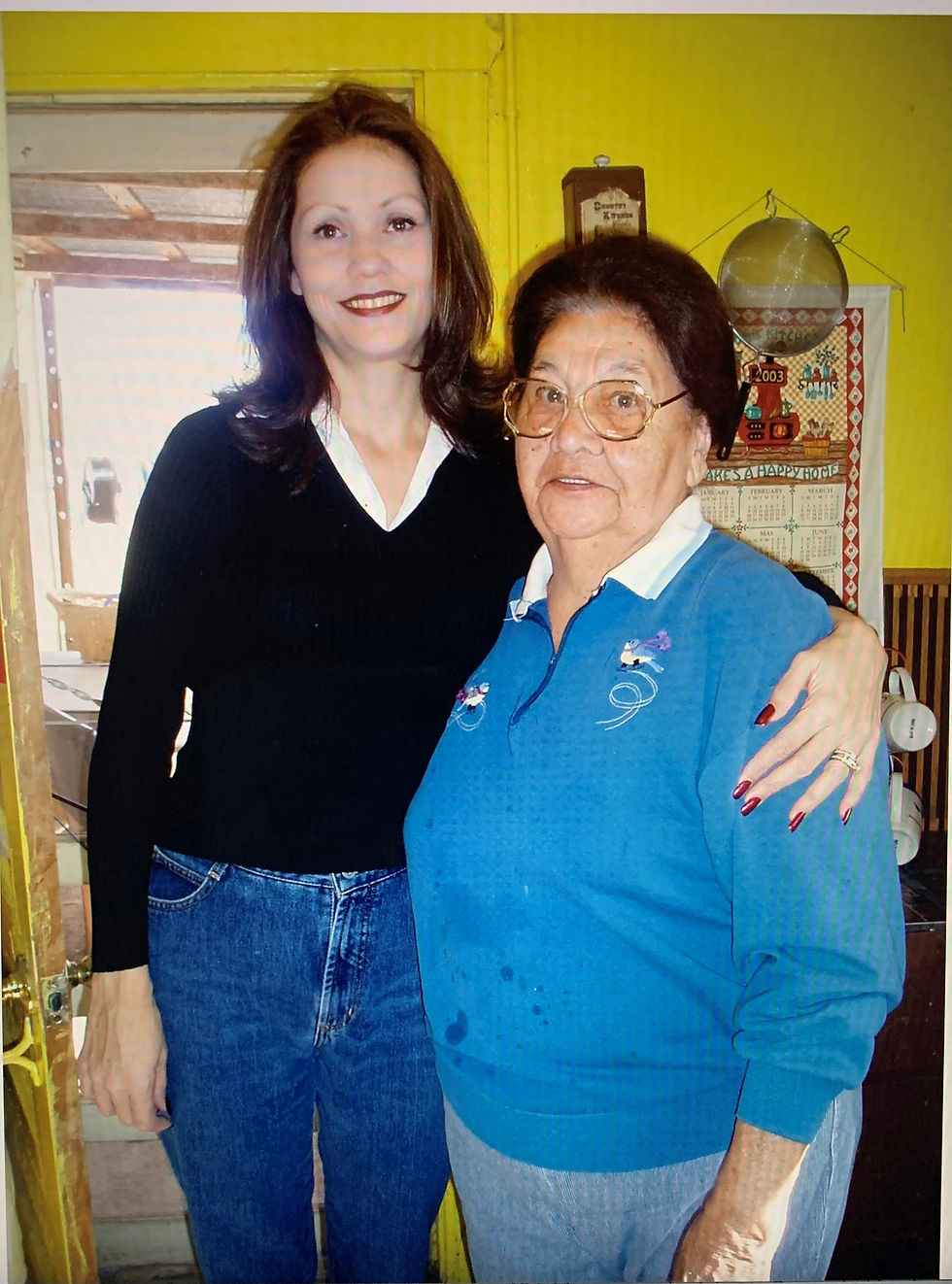
When my mother was unable to care for us, my grandmother stepped in and raised four children under extremely difficult circumstances. She worked tirelessly, and despite the pressure she carried, she remained calm, kind, and steady. I don’t remember her raising her voice, even when she had every reason to. Her strength was quiet, but it was unwavering.
More than anything, she was consistent. I could count on her.
During some of the hardest years of my life, especially when I was dealing with difficult and abusive environments, she was the person I could call. She listened, she defended us, and she reminded me that I was not alone. Even as I got older, got married, and began building my own family, she remained a steady source of encouragement, always reinforcing the importance of staying committed and working through challenges.
Her presence changed the trajectory of my life.
What I’ve learned from her is that it doesn’t take a perfect environment to shape someone’s future.
Sometimes, it takes just one person who shows up consistently, believes in you, and creates a sense of stability when everything else feels uncertain.
Resilience Is Built, Not Born
Resilience is often talked about as if it’s something you’re simply born with. In my experience, it is something that is built—often through circumstances you would never choose.
Because my mother struggled throughout my life, I stepped into responsibility at a very young age. I became a caretaker for my siblings and a source of stability in a very unstable environment. Even today, my siblings say that I have always been the “mom figure” in our family — someone who brings us together, loves unconditionally, and unifies us, especially during difficult times. I might think this comes naturally, but it doesn’t; it is hard, deliberate work.
I also experienced rejection and moments where I didn’t feel like I belonged, but over time, those experiences strengthened my ability to persevere. I developed a high tolerance for both physical and emotional pain — not because I wanted to, but because I had to.
By the age of sixteen, I had reached a point where I could no longer tolerate the strict rules, chaos, and instability at home. The environment was marked by constant disruptions, lack of basic needs, and expectations to follow “mom’s religion,” which made it difficult to focus on myself. At that age, I also became selfish and self-destructive, developing bad habits and behaviors that my twin brother and I shared. In order to have the freedom to make our own choices, my twin brother and I decided to move out and get our own apartment. That decision forced me into independence and taught me how to be self-sufficient at a very young age.
Looking back, those experiences of survival shaped not only my resilience but also my perspective today as a leader.
I have learned to look beyond bad behavior and try to understand the person behind it. People carry different experiences, different levels of support, and different challenges that are not always visible on the surface. I believe every individual has potential, but sometimes that potential needs to be recognized, supported, and developed over time.
I often wonder what would have happened to me if someone had given up on me—I was a hot mess. It took a mentor at the young age of 21 to see beyond my surface failures, bad habits, and behavior and begin to help shape who I would become.
Forgiveness Is Leadership
One of the most important lessons I’ve learned in my life—and in leadership—is the power of forgiveness.
When I gave my life to God, I had to confront my own past and the mistakes I had made. Forgiving myself at that level changed me. It made me realize that I could not fully grow if I continued to hold on to resentment toward others.
That included my mother.
My mother never acknowledged the ways she hurt me. Even when I lost her to cancer at the age of 62, I never heard her say, “Please forgive me.” She didn’t ask for forgiveness—not because she didn’t recognize the wrong, but because she believed deeply that everything she had done happened before she met God, and that it should not be held against her. It was a kind of “I didn’t know better, so I don’t need to apologize” posture.
But over time, I realized that holding on to resentment would only hurt me and limit my own growth. Early in my marriage and as I began building my own family, I made the decision to forgive her anyway—without her taking responsibility. That decision was not about excusing her actions; it was about freeing myself from carrying that pain forward.
Over time, I began to see her through a different lens. I recognized that she, too, had experienced trauma. She had lived through abuse—both in her relationship with my grandfather and with other men—and was repeating behaviors she had seen and experienced herself. That perspective allowed me to extend grace to my mom, even when it wasn’t asked for.
Forgiveness, overall, became central to my personal growth, and it continues to shape how I lead.
I have seen how unresolved trauma can impact leadership in very real ways. When people do not address their past pain, it often shows up in how they interact with others—through mistrust, anger, or an inability to build meaningful relationships. On the other hand, when leaders take the time to heal and process what they’ve been through, they are able to lead with greater awareness, empathy, and intention.
Healing is not separate from leadership. It is a critical part of it.
The Power to Choose What’s Next
If there is one message I hope people take from my story, it is this: where you start does not determine where you can go.
I believe deeply that no one is disqualified from building a different future. With faith, the right people around you, a willingness to grow, and a commitment to doing the hard work, transformation is always possible. You may not be able to change your past, but you can make intentional decisions that shape your future in a meaningful way.
Some people are born into opportunity. Others are born into adversity. But where you start does not determine where you can go. It only determines the strength you will need to get there.
If this resonates with you, I share more of my story in Lost Girl, where I go deeper into the experiences that shaped my journey and the lessons that came from them.
I hope you’ll share it with someone in your life who may need it, and stay connected by subscribing at www.rebeccacontreras.com or following along on Facebook, LinkedIn, and Instagram.

Comments